Why do Dalyan and Göcek look nothing like each other?
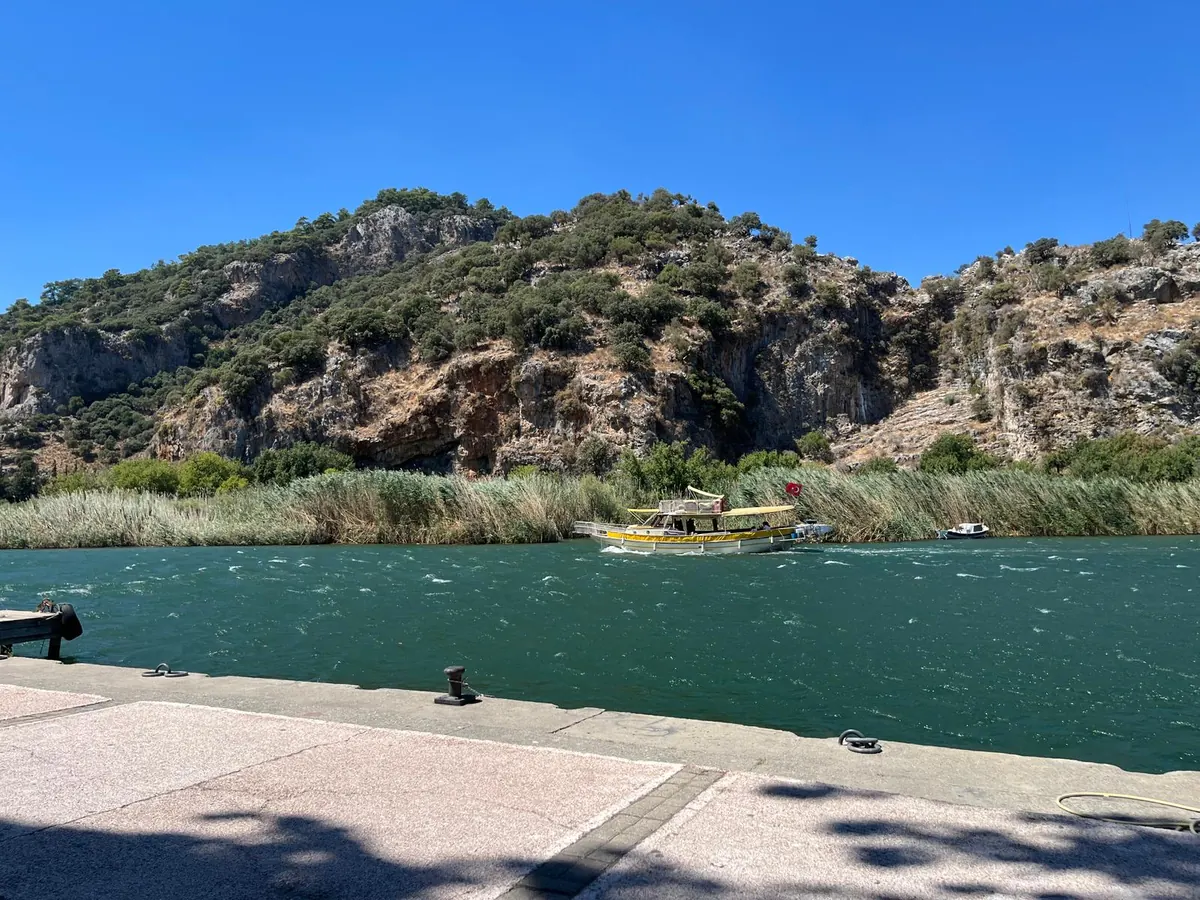
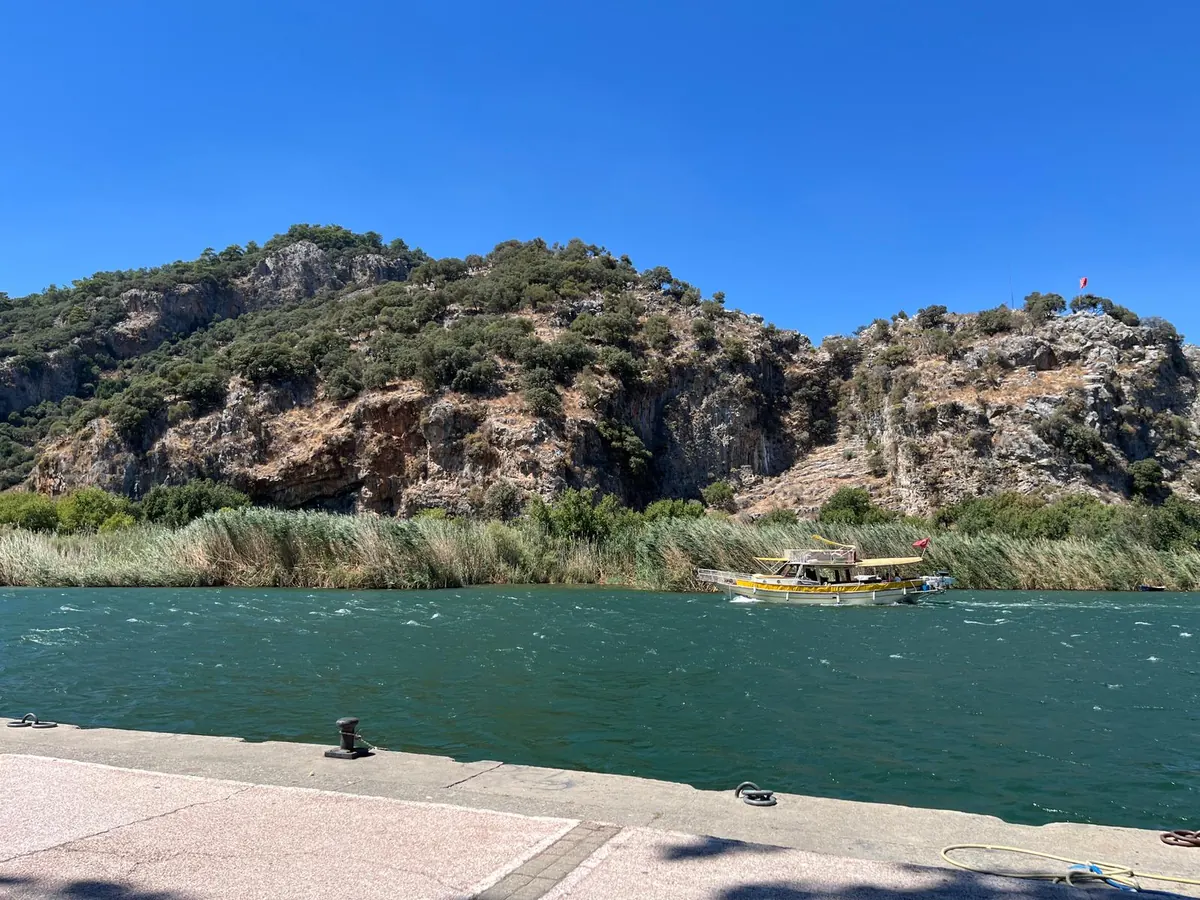
The difference is geology rather than weather: Dalyan sits at the end of a river that has been carrying silt for thousands of years, and Göcek sits on a drowned limestone coast with no river feeding it at all.
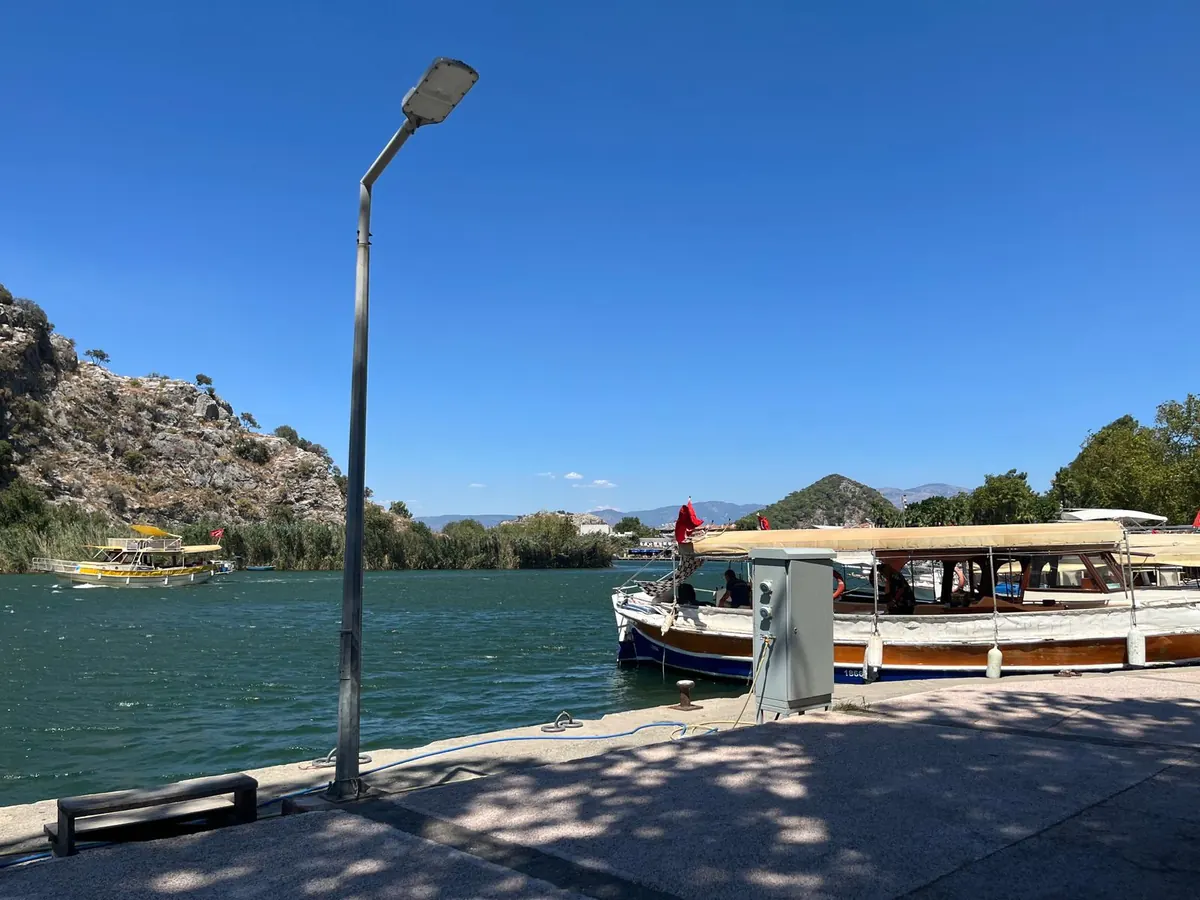
The Dalyan Çayı leaves Köyceğiz Lake, winds through about five kilometres of reed beds and meets the Mediterranean at İztuzu. Everything it picks up on the way stays in suspension, and suspended particles turn water green. That silt is not a footnote — it is what filled in the harbour of Kaunos and finished the city off, and the reed labyrinth your boat travels through is the harbour.
Göcek sits at the head of the Gulf of Fethiye, where pine-covered limestone drops straight into deep, sheltered water. Nothing muddies it, so you get the colour that sells the postcards.
The practical version: day one is a looking day, day two is a swimming day. Book both expecting two beach days and the river will disappoint you.
Which day should you do first, Dalyan or Göcek?
Do Dalyan first and Göcek second — unless the wind forecast says otherwise, in which case swap them without hesitating.
Dalyan is the better opening day because it is forgiving. The delta is flat water, so nobody is seasick on their first morning, the boat is back at the town quay by around half past five, and the day ends with a shower you will genuinely want after an hour in sulphur mud. It is also the day that explains where you are standing — the lake, the tombs, the sandbar — and the coast makes more sense afterwards.
Göcek works better second because a group that has already done eight hours on a deck packs properly for the repeat: more water, more sun cream, the hat that stays on in wind.
The exception is the sea itself. The delta does not care what the open water is doing — the boats run between the reeds regardless — while the island day is genuinely at the mercy of the afternoon meltem that blows through July and August. If your first day looks rough and your second looks calm, take the good sea when it is offered and do the river second.
Day one: what does the Dalyan river itinerary contain?
Day one is about eight hours on flat water, leaving the Dalyan town quay at around 09:30 and back by roughly 17:30, with four fixed stops in a fixed order because there is only one river.
The first twenty minutes are the reed channels: walls of reed three metres high on both sides, the channel narrowing until the boat almost brushes them, herons lifting off ahead of the bow. Then Sultaniye, on the far shore of Köyceğiz Lake — grey sulphur mud smeared on, baked in the sun until it cracks, rinsed off, then thermal water at around 39°C. Allow a full hour and wear something you do not love.
After the lake crossing the boat holds position under the Kaunos rock tombs, which are temple façades with columns and pediments cut directly into the cliff in the 4th century BC by a Carian city working in the Lycian style. You can land and walk the ancient site itself: theatre, acropolis, Roman baths and the silted-up harbour agora.
The afternoon belongs to İztuzu — four and a half kilometres of sand sealing the river off from the sea, protected since 1988 because loggerhead turtles nest along it between May and September. Three to four hours there is the correct amount.
- 09:30 · Dalyan town quay, straight into the reed channels.
- 10:15 · Sultaniye mud baths and hot springs — allow an hour.
- 11:45 · Köyceğiz Lake crossing with the Taurus mountains behind it, tea on board.
- 13:00 · Kaunos rock tombs from the water, optional landing at the ancient city.
- 14:00 · İztuzu Beach — three to four hours, café and the DEKAMER turtle rescue centre at the river end.
- 17:30 · Back up the river to Dalyan, usually with the light going gold on the tombs.
Day two: what does the Göcek 12 Islands tour from Dalyan include?
Day two is six to eight anchorages in the Gulf of Fethiye, and most of it is spent in the water rather than looking at anything.
The name is a label, not a count. Nobody visits twelve islands in a day and the good boats do not try — an honest skipper picks the anchorages that suit the wind that morning and stays longer at each one. Yassıca, Tersane, Aquarium Bay, Cleopatra Bay and Red Island are the names that come up most often.
Tersane is the island most boats go ashore for: the largest in the gulf, with the remains of a boatyard and an abandoned village among the pines. Everywhere else the point is the anchor. Swim off the back of the boat, snorkel along the rock wall, get out, eat, do it again. Lunch is cooked on board and served at anchor rather than in a restaurant.
Sea temperature decides how good this day is. It is bracing in early May, comfortable from June, and warmest in the second half of September, when the water has had the whole summer poured into it and the air has come off its peak.
- Morning · road transfer from your door in Dalyan to Göcek harbour, or on to Fethiye harbour.
- Late morning · first anchorage, often the Yassıca group at the head of the gulf.
- Tersane Island · the stop most boats go ashore for.
- Lunch cooked on board and eaten at anchor.
- Two or three afternoon bays, chosen on the day for wind and shade.
- Early evening · back on the road and into Dalyan in time for a late dinner.
How far is Göcek from Dalyan, and how do you get there?
Göcek is about 45 kilometres from Dalyan and takes 45 to 50 minutes by road, which is what makes a two-centre boat itinerary possible without moving hotels.
The route is the D400 east through Ortaca and past Dalaman. The tunnel people mention when they talk about this road is on the far side of Göcek, between Göcek and Fethiye, so it is not on your journey at all coming from Dalyan.
Boats for the islands leave from two harbours and both end up on the same water. Göcek is the closer one and puts you among the northern islands within about half an hour of casting off. Fethiye harbour is roughly an hour from Dalyan, its boats are bigger and more numerous, and more of your morning goes on getting out of the bay.
Worth knowing while you are still booking flights: Dalaman Airport sits between the two, about 25 kilometres and 25 to 30 minutes from Dalyan and a similar run in the other direction to Göcek. A Muğla boat itinerary built around these two has almost no dead driving in it.
Should you stay in Dalyan both nights, or move to Göcek?
For a two-day trip, stay in Dalyan both nights. Moving hotels costs you a morning, and a morning is a quarter of what you have.
Dalyan works as a base because the river trip starts at the bottom of the town — you walk to it — and the island day is a minibus at the door. You unpack once, you eat on the same waterfront twice, and the second evening you already know which table you want.
Göcek is worth an evening but it is a different kind of place, and it is fair to say so. It is a marina town: a shaded main street, a waterfront built around people who arrived by yacht, and no beach of its own. If you are here for a week rather than two days, splitting the nights makes sense — you wake up on the gulf and can be at an anchorage before the day boats arrive.
What we would not do is base the whole holiday in Fethiye or Ölüdeniz and drive over for the river day. It works, but two to three hours of road comes straight out of your time on İztuzu.
What do you need to pack differently for each day?
The two days need different bags, and the common mistake is packing once for both.
Day one is the mud day. Bring a swimsuit you do not care about, because sulphur discolours light fabric and the smell never fully washes out. Take rings and bracelets off before you get in — the mud dulls silver. Carry Turkish lira in cash for the mud bath entrance and for Kaunos if you land: both are collected at their own gates and cannot be paid to the boat.
Day two is the sea day. A mask and snorkel if you own them, motion sickness tablets before boarding if anyone in the group is prone, and something with sleeves for the middle of the day. You are in and out of the water for six hours, and the burn happens on the deck between swims rather than in the sea.
Both days want a dry bag. Nearly every phone lost on this coast went into the water from a boat, not from a beach.
- Day one: an old swimsuit for the mud, a towel, a full change of clothes, cash in lira, no jewellery.
- Day two: mask and snorkel, a long-sleeved top for midday, motion sickness tablets, a dry bag.
- Both days: high-factor cream reapplied after every single swim, a hat that survives wind, and a light layer for the ride home.
Who should not do these two days back to back?
Skip the back-to-back version if anyone in the group is a poor sailor, if you are travelling with toddlers, or if you burn easily.
The gulf is usually calm inside the islands, but it is real sea and the afternoon wind does get up. The river is flat water in almost any weather. A group with one bad sailor in it should do the Dalyan day and then spend the second day at İztuzu with a book rather than committing to eight hours offshore.
Two consecutive full days on a deck is also more sun than most northern European skin has seen in a year, and it stacks. If the holiday is long enough, put a slow day between them — Kaunos on foot in the late afternoon when the stone turns orange.
And if you only have one day, choose by what you actually want. The gulf gives you swimming the delta will never match. The delta gives you something that exists nowhere else on this coast, and no amount of turquoise replaces a 2,400-year-old tomb at eye level from the water.
When is the best time for a two-day Dalyan and Göcek itinerary?
May, June, September and early October are the best weeks for this pair of days, and September is the strongest of them.
The reason is the sea. It warms slowly and cools slowly, so the water in the second half of September is warmer than it was in June, while the air has dropped back and the boats have emptied out. June is the other sweet spot: everything open, the hills still green.
July and August regularly pass 35°C. Both days still run and both are still worth doing, but the delta holds heat between the reed banks, the meltem gets up over the gulf in the afternoon, and you will plan the whole week around shade and water.
April and late October are a gamble. The river day is the robust one and runs in conditions the island day cannot: boats in the gulf are the first to stop for the season and the last to start again. At the edges of the year, book the Dalyan day for the date you must have and treat the Göcek day as the one that might move.