What is a serpme village breakfast, and what actually arrives at the table?
Serpme kahvaltı means "scattered breakfast", and it describes the format rather than a recipe: everything comes out together, in a crowd of small dishes, priced per person for the whole table. You do not choose items. You choose the breakfast, and then you choose what you eat from it.
The word kahvaltı itself is kahve altı — "under coffee", meaning the thing you eat before coffee. That tells you the order of the morning in Türkiye. Tea comes with the food and lasts the whole meal; coffee, if you want it, comes at the end.
A village breakfast — köy kahvaltısı on the board — is the same format with an emphasis on local produce: cheese and butter from the hills behind Köyceğiz, honey from Muğla province, which is Türkiye’s pine honey region, and eggs with orange yolks. The two names overlap and no rule polices them, so ask what makes theirs a village one. A place that can answer has thought about it.
What lands on the table varies, but the backbone is consistent enough that you can plan around it.
- Cheese: soft white beyaz peynir, always, and usually a firmer aged kaşar. Sometimes a herbed or smoked local cheese as a third.
- Olives: green and black, often two preparations of each, cracked with garlic or oil-cured.
- Vegetables: tomato, cucumber, green pepper, sometimes rocket or fresh mint — raw, unseasoned, cut that morning.
- The sweet end: butter with comb honey, kaymak (clotted cream), tahini mixed with grape molasses, and a row of jams — fig, sour cherry, apricot, rose.
- A hot dish: menemen (eggs scrambled slowly with tomato and green pepper), eggs fried with sucuk sausage, an omelette, or a plain boiled egg each.
- Something fried or baked: sigara böreği, a wedge of börek, or gözleme rolled and griddled to order.
- Bread: a basket, refilled, and in the better places baked that morning rather than sliced from a loaf.
- Tea: black, in tulip glasses, refilled repeatedly. Whether that is included or counted per glass is the one thing worth checking up front.
Why eat breakfast by the river instead of at your hotel?
Because roughly 07:30 to 09:30 is the only stretch of a Dalyan summer day that is cool, quiet and outdoors all at once, and the river front is where the town spends it. In July and August the afternoon runs well over 35°C and the delta holds the heat; the morning is the part of the day you can actually sit in.
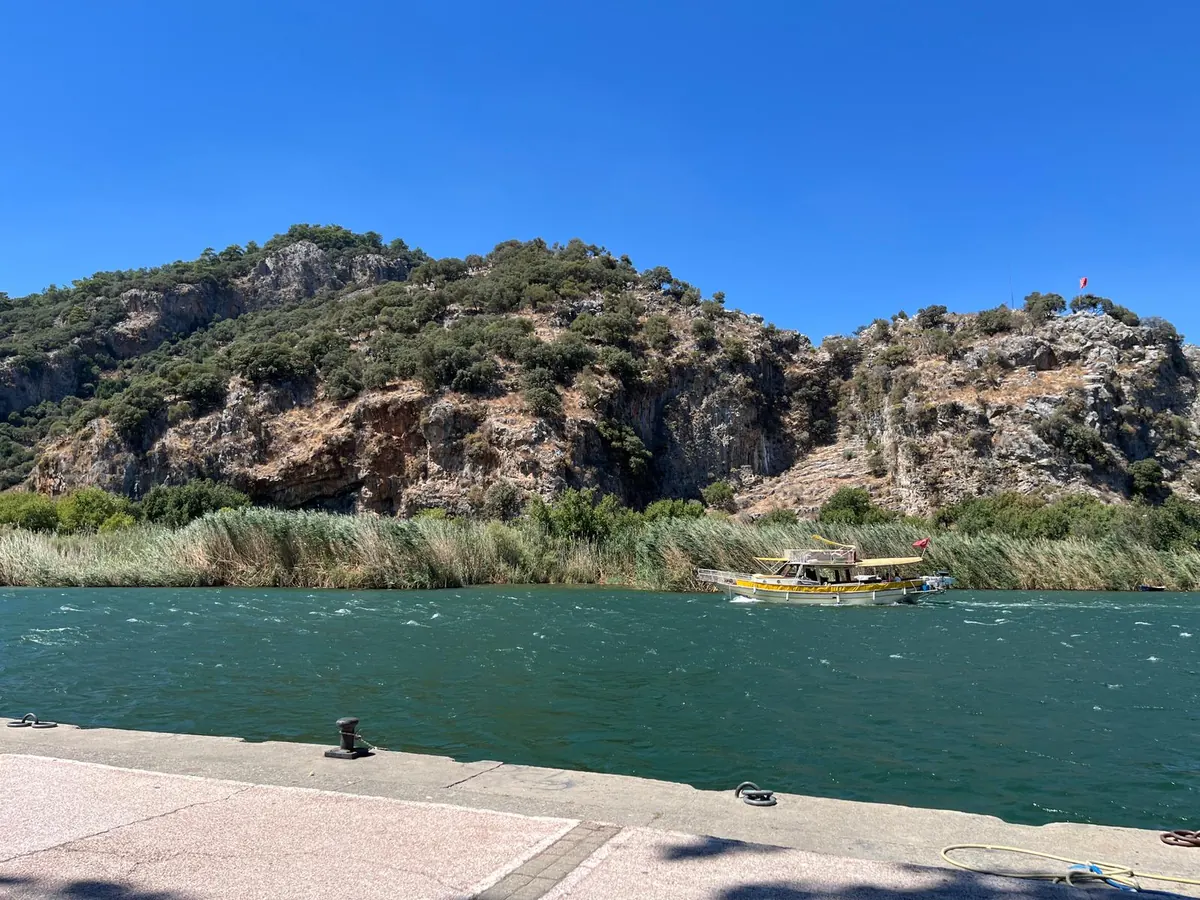
The river is also working at that hour. Boats are hosed down at the jetties, the wooden fishing weirs that give Dalyan its name sit across the channel, herons lift out of the reeds, and the shuttle boats start moving down towards İztuzu. By eleven this has settled into the business of a tourist town. At eight it is a place where people live.
One honest caveat about the view: the cliff of rock tombs opposite the town does not perform in the morning. Those façades face west, and the forty minutes before sunset is when they turn from grey to honey to orange. At breakfast the rock reads flat and pale. You are still eating opposite a 2,400-year-old cliff, but the photograph is an evening errand.
A hotel or villa breakfast is included and convenient, and there is no reason to skip it every day. Skip it twice. The spread by the water is a different meal, not a better version of the same one.
How long does a Turkish breakfast take, and when should you sit down?
Allow ninety minutes for a full serpme, and about forty if you order a smaller plate instead. The food arrives fast — most of it is already prepared and comes out within ten minutes — but the meal is built around tea refills and it is designed to be slow.
The timing that matters is the boat. Shared boat trips leave the town quay at 09:30, and pick-ups from hotels and villas inside Dalyan start earlier than that. If you have a boat that morning, sit down by 07:45. That gives you the meal, the walk to the jetty and the ten minutes of standing around that every departure involves.
Sit down at 08:45 for a 09:30 boat and you will eat a quarter of the table. On those mornings order eggs, bread and tea, and save the full spread for a day with nothing in it.
Dalyan is walkable end to end, so nowhere on the river front is more than about ten minutes from the quay on foot. Distance is not your problem. Pace is.
Is a big breakfast a good idea before a Dalyan boat trip?
Yes, and it is a better idea than most people assume, as long as you eat the salty and savoury half of the table rather than the jam. A boat day is eight hours of sun, a sulphur mud bath, swimming and very little shade at İztuzu, and lunch on that itinerary lands late.
Seasickness is not the reason to eat light here. The delta is flat river water and the lake crossing is calm — this is the trip we recommend to people who are worried about a boat at all. Heat and dehydration are the real risks, which is an argument for cheese, olives, eggs and several glasses of tea before you leave, not against them.
Two practical points. A very full stomach in a 39°C thermal pool is unpleasant, and the mud stop comes about forty-five minutes after departure — eat well, but stop before you are heavy. And carry cash from breakfast onwards: site entrances and the beach café want lira in hand, even where the breakfast place took a card.
How do you pick a good riverside breakfast place in Dalyan?
Look at the bread, the tea and who else is sitting there — those three signals sort the river front faster than any review score. We do not name places here: kitchens change hands between seasons, and a recommendation that is no longer true is worse than none. Here is what to check on the way past.
- The bread. If it arrives warm, thick-crusted and torn rather than sliced from a plastic-wrapped loaf, the rest of the kitchen usually follows.
- The eggs. Ask whether the menemen is made when you order. It should take ten minutes and arrive still moving in the pan. Anything sitting in a warmer will taste of the warmer.
- The tea. It should come from a proper double pot or samovar and be refilled without being chased. Weak, single-serve tea in a mug is a sign about everything else.
- The other tables. Turkish families eating a long breakfast on a Sunday morning is the strongest signal on the river. Locals do not eat where the breakfast is bad.
- The board. A short list in Turkish with a few English lines is a better sign than a laminated menu photographing every dish in five languages.
- The shade. Morning sun comes across the river low and direct. Check there is an awning, a vine or a tree over the table you are choosing, or you will move halfway through.
- One street back. The tables directly over the water carry a premium for the view. A place a street inland is often the same food for less, and in July that side is cooler.
- The honey. Comb honey served in the frame, rather than a squeeze bottle, tells you what the kitchen thinks of its own breakfast.
What is worth ordering beyond the standard spread?
Menemen, gözleme and bal kaymak are the three additions worth the extra plate, and all three are better here than they will be at home. Most riverside kitchens will make any of them alongside a serpme, or on their own if you want a lighter morning.
Menemen is eggs cooked slowly into softened tomato and green pepper — soft, almost spoonable, never dry. Order it with the pepper if you like heat and without if you are feeding children. It is the single most reliable thing on a Turkish breakfast menu.
Gözleme is thin dough rolled out and griddled with a filling: cheese and parsley, spinach, potato, or minced meat. In the places that take it seriously it is made in front of you at a low table, and it travels well if you want half of it on the boat.
Bal kaymak — comb honey with clotted cream on bread — is the reason to leave room. Pine honey is darker and less sweet than flower honey, closer to malt. If both are on the table, try them side by side.
Two more worth knowing: tahin-pekmez, tahini stirred into grape molasses, the sweet spread children here grow up on; and sucuklu yumurta, eggs fried in the fat of spiced sausage, which is not a light dish and does not pretend to be.
How is riverside breakfast priced in Dalyan?
A serpme is priced per person and usually needs a minimum of two, because the whole thing is built to be shared. We do not publish figures on this site — prices move through the season and a number printed one year misleads readers the next — but the structure is consistent and worth knowing before you sit down.
One per-head price covers the full spread and the bread. Hot dishes may be inside that price or listed separately, and this is the most common surprise on the bill. Tea is sometimes unlimited within the breakfast price and sometimes counted per glass. Fresh orange juice is almost always extra and almost always worth it.
Ask two questions when you sit down: is the menemen included, and is the tea. Thirty seconds of asking removes the entire category of complaint people have about breakfast bills in a holiday town.
Payment: cards work in most restaurants and shops in Dalyan, but smaller tea gardens and family places prefer lira in cash, and a few only take it. There are ATMs in the centre. Tipping is not compulsory and is always noticed — rounding up is normal.
What if you are vegetarian, vegan or avoiding gluten?
A Turkish breakfast is overwhelmingly vegetarian by default, mildly difficult vegan, and genuinely hard gluten-free. Knowing which of those three you are changes how you order.
Vegetarians have the easiest morning of anyone in Türkiye. Remove the sucuk and the meat börek and the table is unchanged — cheeses, olives, vegetables, eggs, jams, honey, bread. Nobody will find the request strange and nothing needs explaining.
Vegans have to work, because cheese, butter, egg, honey and kaymak are five of the pillars. What remains is still a real meal: olives, tomato, cucumber, pepper, tahini with molasses, jams, bread, and often a potato or spinach gözleme made without cheese or butter on the griddle. Say "vegan" and then name the items — the word is understood in tourist Dalyan, but the details are what matter.
Gluten is the hard one. Bread is not a side dish at this meal, it is the plate everything else goes onto, and there is rarely a substitute. The workable version is menemen or eggs with cheese, olives and vegetables ordered as a plate rather than a serpme. Tell them before the bread basket comes out.
Children: plain omelette, cucumber, white cheese, bread and honey covers almost every fussy eater, and no riverside place in Dalyan will blink at a child eating only that.
When is the best time of year for a riverside breakfast in Dalyan?
May, June, September and early October give you the best mornings: warm enough to sit out in a t-shirt at eight, cool enough that the table stays comfortable until ten, and everything on the river open. Those are also the months we recommend for the whole holiday.
In July and August, breakfast becomes the best outdoor meal of the day by default. Sit early — 07:30 to 09:00 — and you get the river before the heat arrives. Sit at eleven and you are eating in the low thirties with the sun coming off the water at you.
April and late October are a gamble that often pays: green hills, mornings cool enough for a jacket, and some places not open yet or already shut. From November to March most tourist businesses on the river are closed, though a few tea gardens stay open for the town itself.
One scheduling note: the street market is in Dalyan on Sunday and in Köyceğiz on Monday. A long breakfast followed by an hour at the Sunday market is the most pleasant morning available in this town, and it costs nothing but the meal.