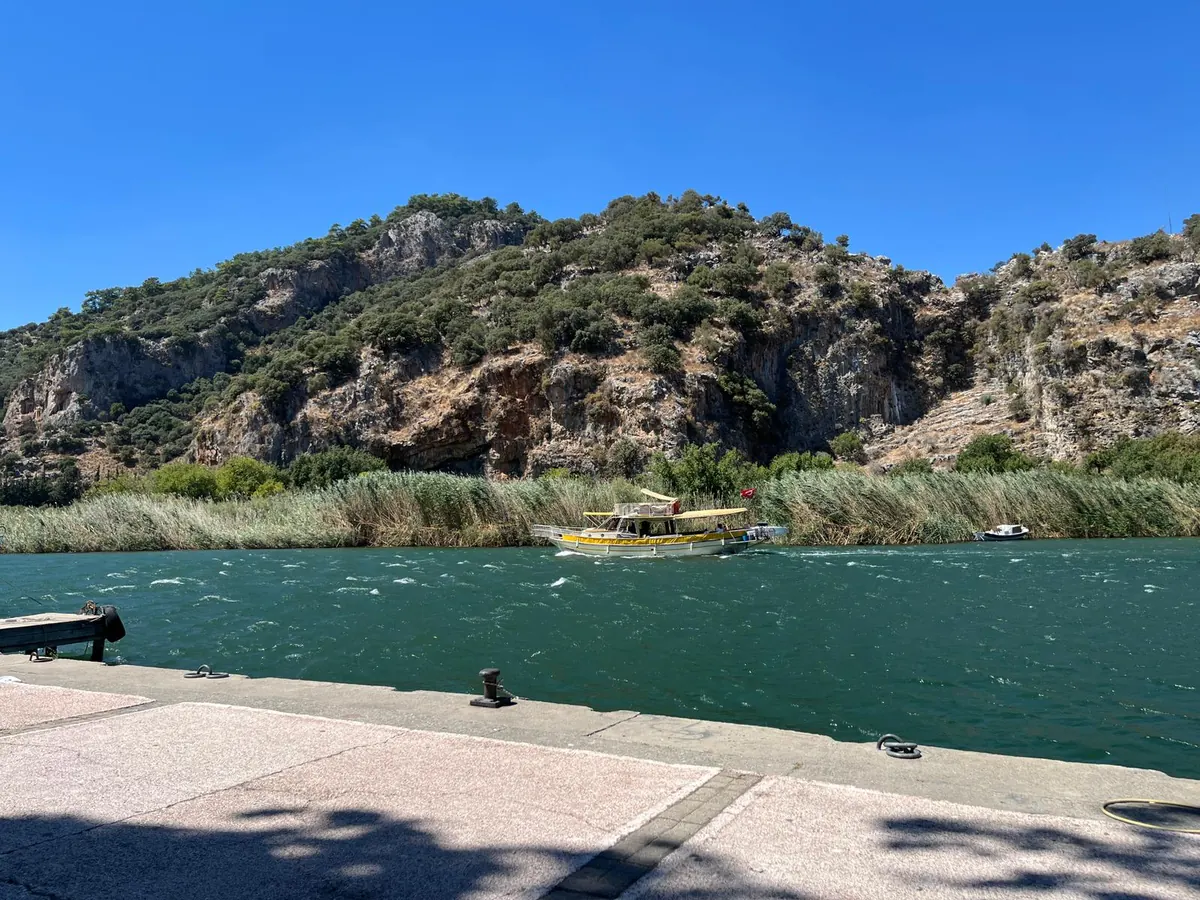
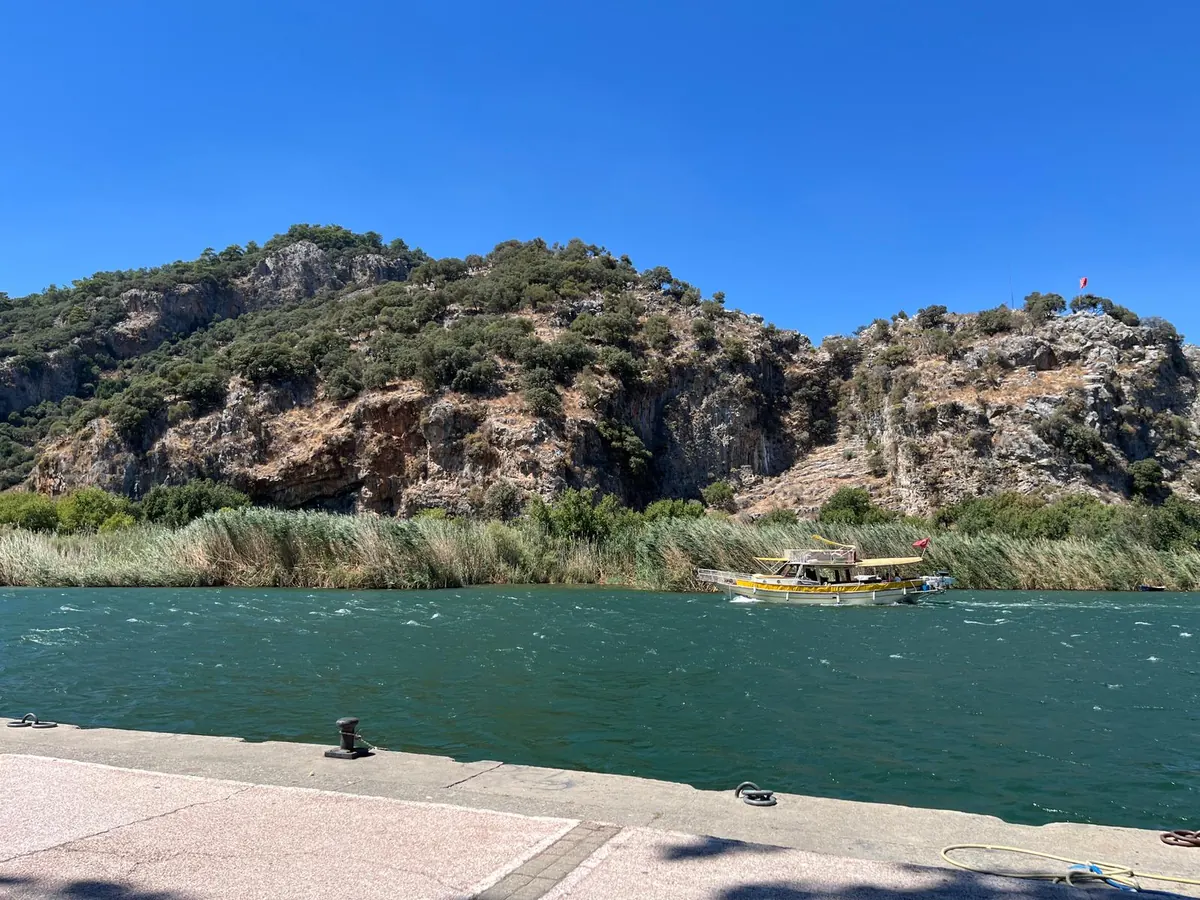
Most holidays move too fast
There is a style of travel that treats a region like a checklist. Five sights before lunch, three after, a photograph at each to prove it happened. It is efficient, and it leaves people oddly unsatisfied, because the sights become things to finish rather than things to experience.
The Turkish coast is especially vulnerable to this. So much is within reach that it is tempting to see all of it: Fethiye one day, Pamukkale the next, a boat, a canyon, a jeep, a market. By the end, the places merge.
Dalyan works best when you resist that. It is a small town on a slow river, and its best experiences only reveal themselves when you give them time.
What slow travel actually means
Slow travel has become a marketing phrase, but the idea behind it is plain: visit fewer places, stay longer in each, and move at a pace that lets you notice things.
It is not about doing nothing. It is about doing things in a way that leaves space around them. One full day on the river instead of three excursions. Two nights more in the same town instead of another transfer. Lunch that lasts as long as it lasts.
The river enforces this naturally. In the reed channels the boats go slowly because they have to. You cannot rush the lake crossing. You cannot make the tombs appear sooner. For once, the setting sets the pace, and most people find they like it.
Looking up at twenty-four centuries
The rock tombs of Kaunos are generally dated to the fourth century BC. They were cut into the cliff as temple fronts, with columns and pediments, for the rulers and wealthy families of a city that was already old by then.
From a boat, you see them the way people have seen them for over two thousand years: from below, from the water, small figures looking up. It is hard to hold that length of time in your head, and the attempt is part of the experience. Everything you were worried about on the way to the airport shrinks a little.
If you want the history in more detail, including why a Carian city has tombs in the Lycian style, we cover it in the Kaunos King Tombs guide.
The oldest travellers on the river
The loggerhead turtles that feed in the channel belong to a group of animals whose ancestors were swimming the oceans long before the dinosaurs disappeared. They migrate across the Mediterranean and return to nest on the beaches where they hatched.
Watching one surface next to the boat, breathe and sink out of sight is a small event and a strange one. The animal has no idea you are there on holiday. It is simply continuing something that has been going on, in one form or another, for a very long time.
That is a useful feeling to carry around for a few days. Our turtle guide explains where and when you are most likely to see them, and how to do it without disturbing them.
What awe does
The psychologist Dacher Keltner, who has spent much of his career studying awe at the University of California, Berkeley, describes it as the feeling of being in the presence of something vast that you cannot immediately understand.
One of the consistent effects his work and others have described is what researchers call the “small self”. In moments of awe, people feel less self-focused, more connected to others and less preoccupied with their own worries. It is not a grand spiritual event. It can come from a view, a piece of music or a very old stone.
Dalyan offers several quiet sources of it in a single day: the scale of the delta, the age of the tombs, the persistence of the turtles, the light over the lake at the end of the afternoon. You do not need to look for awe. You only need to go slowly enough for it to reach you.
A landscape that is still moving
The Dalyan delta looks permanent, but it is anything but. Kaunos was once a working harbour city on the sea. Over centuries the river carried silt down from the hills, the coastline crept outward, and the harbour filled in. Today the ruins stand well inland, above a river and a maze of reeds.
The same process built İztuzu, the long sandbar where the river meets the sea. The landscape you cross on a boat trip is the latest frame in a very slow film, and it is still changing.
Knowing that makes the trip feel different. The reeds are not scenery; they are the delta building itself. We explain how the lake, the river and the sea fit together in our guide to the Dalyan delta.
How to travel slowly on a Dalyan boat trip
Slow travel is mostly a matter of small choices. On the river, these make the biggest difference:
- Sit at the front for the reed channels and stay quiet for the first twenty minutes.
- Choose depth over coverage. A private boat lets you linger at one place instead of rushing through four.
- Stay an extra night in Dalyan. Our three-day itinerary shows how to spread things out.
- Watch the tombs at dusk from the riverfront, when they turn gold and then disappear.
- Take an evening cruise on Lake Köyceğiz, which has no sights to tick off at all.
None of this requires special effort. It only requires deciding, before you start, that a good day is not measured by how much you saw.
What you take home
The souvenirs from a slow day on the Dalyan river are not really objects. They are a slightly adjusted sense of proportion, a memory of how quiet a morning can be, and the realisation that the fastest way to see a place is rarely the best way.
People who come back to Dalyan year after year often say the same thing: they do not come for anything new. They come to spend a day on the water at the river’s pace, and to leave with their own pace reset.
If that appeals, we also wrote about why a day on the water clears your head, which looks at the same experience from the other side: what it does for a tired mind.