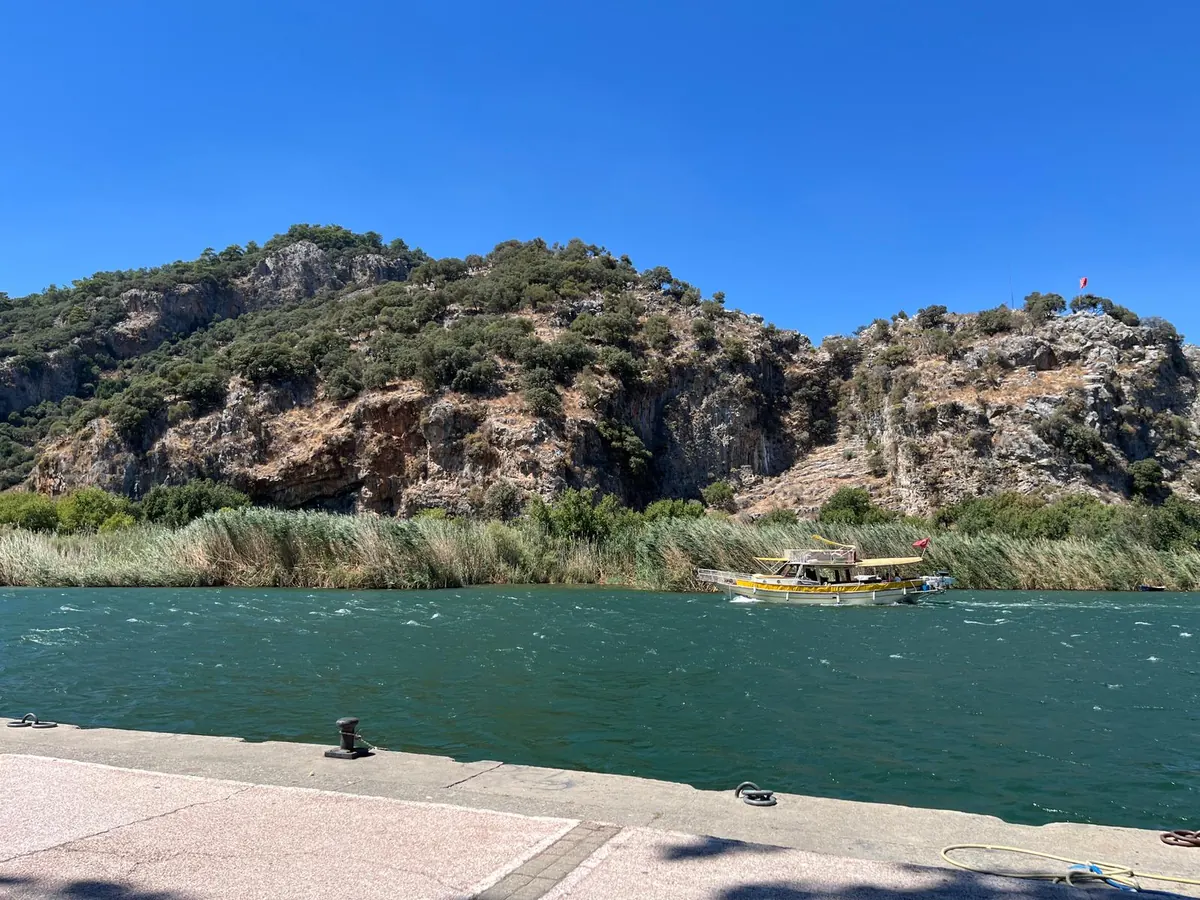
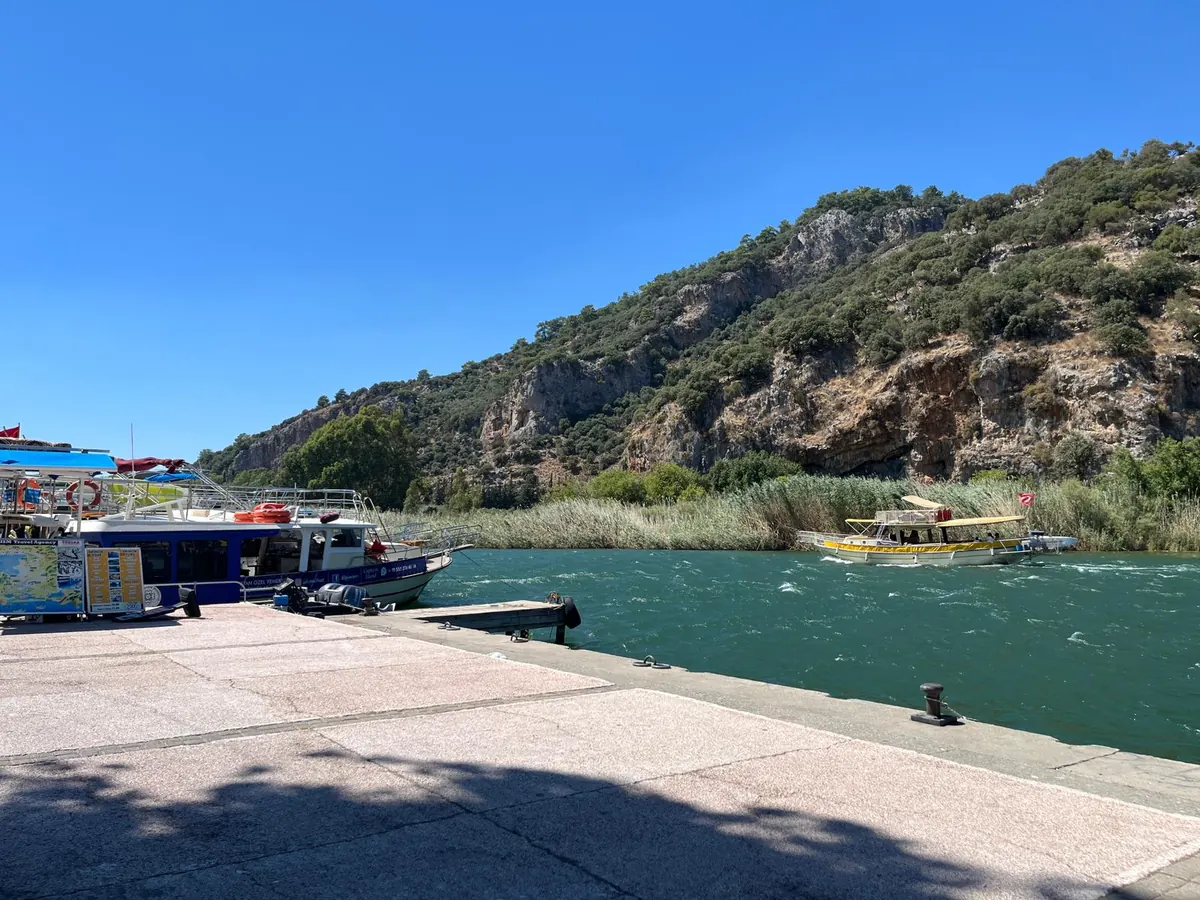
The short answer, if you only want one
If you want the best all-round conditions for a Dalyan boat trip — warm sea, comfortable air, a river that is busy but not shoulder-to-shoulder — come in the second half of September or the first half of June. Those two windows sit either side of the summer peak, and they get you the same route, the same stops and the same water at a gentler temperature and with fewer boats sharing the jetties.
If your dates are fixed by school holidays and you can only travel in July or August, you have not missed anything important. The boats run every day, the delta looks its best under a hard blue sky, and the mud baths and İztuzu are exactly where they always are. You simply plan around the heat rather than pretending it is not there — an earlier start, more shade, more water.
And if you are visiting outside April to October, be honest with yourself about what is on offer. Dalyan in winter is genuinely lovely and almost empty, but scheduled Dalyan boat tours mostly stop. That is covered further down.
What actually changes from month to month
Four things move through the season, and they do not move together. Understanding that is most of the decision.
- Air temperature climbs steadily from April, peaks through July and August, and drops away in October.
- Sea temperature lags behind the air by roughly two months. That is why September water feels better than June water even though the air is cooler.
- Crowds are not a smooth curve. They spike hard from mid-July to the end of August, when Turkish and European school holidays overlap, and fall away quickly afterwards.
- What is open follows the boats. Riverside restaurants, jetty kiosks and the beach facilities wind down through late October and most do not reopen until spring.
The practical consequence is that the shoulder months are not a compromise. Late May and late September give you three of those four things at their best and only one — peak air temperature — slightly below maximum, which for most people walking around ruins and sitting on an open deck is an improvement rather than a loss.
The river itself changes too. In spring it carries more water down from Köyceğiz and runs a deeper green; by late summer it is lower, clearer and warmer, and the reed channels feel narrower and more enclosed. Neither is better. They are different trips through the same landscape.
April and May: the green months
April is when the season restarts. Boats begin running, the hills behind the town are still green rather than burnt gold, and the delta is loud with birds. Daytime air is usually pleasant rather than hot — the kind of weather where you want the sun on the deck rather than shade from it — and rain is still possible, particularly early in the month.
The catch in April is the sea. Water temperature is at its lowest lag point in the year, and while people do swim at İztuzu in April, most of our guests get in, make a noise about it, and get out. The Sultaniye mud baths and thermal pool more than make up for it: a hot spring is a much better idea in April than it is in August.
May is the month a lot of returning visitors quietly prefer. The air is properly warm, the sea has begun to catch up, the wildflowers are still out and the boats are not yet full. Loggerhead nesting season begins, which means İztuzu comes under its night-time restrictions, but daytime access is unchanged and your chance of seeing a turtle from the boat rises sharply. If you want to understand what you are looking at, we wrote a separate guide to spotting loggerheads in Dalyan.
One April and May advantage that nobody advertises: light. The sun is lower, the Kaunos cliff face takes shadow better, and photographs of the rock tombs from the water come out with depth in them instead of flat glare.
June: the balance point
June is the first month where everything works at once. The air is hot but not punishing, the sea has warmed to the point where swimming is a pleasure rather than a dare, and the serious crowds have not arrived. Boats run to full schedule and the whole route — reed channels, the Kaunos rock tombs, the mud baths, İztuzu — is comfortable to do in a single day.
The distinction inside June matters. The first two weeks still feel like late spring: quieter jetties, easier tables at the riverside restaurants in the evening, and enough space at İztuzu to walk away from the main entrance and have sand to yourself. From roughly the third week onwards the town starts filling, and by the end of the month it is behaving like high summer.
June is also when the day lengthens enough for the evening trips to make sense. A sunset cruise in April finishes while it is still bright; in June you get the whole slow change of light on the water, which is the entire point of going out in the evening.
If you have flexibility and you want one recommendation from this article, early June and late September are it.
July and August: hot, busy, and still the sea you came for
These are the two months most visitors actually travel in, because these are the two months school is out. It is worth being straightforward about them. Daytime temperatures in Dalyan through July and August are frequently in the mid-thirties Celsius and can go higher; the air is dry, there is very little cloud, and the sun on open water is stronger than it feels.
None of that makes a Dalyan boat tour a bad idea in high summer. It makes the timing of the day matter more. Boats generally leave in the morning, and the morning stretch through the reed channels — shaded in places, with air moving over the deck — is the most comfortable part of the day. By the time the heat peaks you want to be in the water at İztuzu, not walking a cliff path.
The sea in August is at or near its warmest of the year, which is the compensation for everything else. If your priority is swimming — long, unhurried, get-out-only-for-lunch swimming — August delivers it better than any other month.
Crowds are the real cost. The jetties are busy, the popular stops have more boats on them, and the riverside restaurants want a booking rather than a walk-in. If you are travelling in these weeks and you want space, a private boat rather than a shared one changes the day more in July and August than at any other point in the season, because you set your own timings and stop where the others are not.
One practical note: shade on a Dalyan boat is real but limited, and it is shared. If someone in your group needs to be out of the sun for most of the day, say so when you book rather than on the jetty.
September: what most people here would pick
Ask people who work on the river which month they would take off, and a lot of them say September. The reason is the lag described earlier: the sea is still holding August’s heat while the air has started to let go of it. You get the best swimming of the year in weather that lets you actually enjoy the walking, the ruins and the deck.
The month splits. The first week or so still carries the tail of the summer holidays. From around the second week, the families with school-age children have gone, the jetties calm down, and Dalyan settles into the version of itself that regular visitors come back for. Restaurant tables open up. The beach spreads out.
September is also a good month for turtles. Nesting season is winding down but the adults are still working the channel and the weirs, and with fewer boats on the water there is less disturbance and more chance of a long, unhurried sighting rather than a glimpse.
Rain becomes possible again towards the very end of the month, usually as a short, heavy afternoon shower rather than a washed-out day. It is not a reason to avoid September. It is a reason to not leave your only dry layer at the hotel.
October: the quiet end of the season
October is the month to come if what you want from Dalyan is the place rather than the beach club. The sea stays swimmable for most of it, the air is comfortable all day, the light is long and low, and the town is unmistakably winding down — which, depending on what you are after, is either the drawback or the entire attraction.
Boats keep running through October, though schedules thin out as the month goes on and some trips switch from daily to on-demand. Towards the end of the month it is worth confirming rather than assuming, particularly for the evening cruises, which depend on both weather and numbers.
The mud baths come back into their own here for the same reason they work in April: a hot spring is much more appealing when the air has cooled. An October Dalyan boat trip that lingers at Sultaniye and gets to İztuzu in the early afternoon is close to a perfect day out.
By the last week, expect closures. Some restaurants and shops shut for the winter, and the beach facilities pack up. The river does not care and looks exactly as good as it does in June.
November to March: what happens when the boats stop
Scheduled Dalyan boat trips largely stop after October. This is not a marketing decision — it is weather, daylight and the fact that most of what the route is built around, from swimming at İztuzu to sitting on an open deck for eight hours, does not work in a Mediterranean winter.
Dalyan itself stays open, in the way a working town stays open. Winter here is mild rather than cold, wet rather than freezing, and the reed beds turn from green to a pale, dry gold that looks completely different from the summer photographs. Birds arrive. The Kaunos tombs are still on the cliff and the site is still there to walk.
What you can usually still arrange in winter is a short private run on the river, weather permitting — an hour or two to the tombs and back, rather than a full day. It depends entirely on conditions, so it is a conversation rather than a booking form.
If your dates fall in winter and a boat day matters to you, the honest advice is to move the trip rather than force it. If your dates are fixed and you simply want to see Dalyan, come — just come with the right expectations and a coat.
Choosing the right hour, not just the right month
Month is the big lever, but the hour you go out is the one most visitors never think about, and in Dalyan it changes the day more than a fortnight either side of your dates would.
Morning departures are the standard for full-day trips, and there is a reason. The water is flattest, the light on the reeds is soft, wildlife is active, and you arrive at the mud baths before the mid-day queue. On any full-day Dalyan boat tour between June and September, the first two hours are the ones you will remember.
Evening is the other end of it. A sunset run does not try to cover the whole route; it trades the stops for the light, and the delta at dusk is a different landscape from the delta at eleven in the morning. In the hottest weeks it is also the only way to be on the water in genuinely comfortable air.
Midday departures exist and they are fine, but from July to early September they are the least comfortable option and the busiest jetties. If you have a choice, take the early boat.
Which Dalyan boat trip suits which month
Matching the trip to the month is easier than it looks, because the season does most of the choosing for you.
- April, May and October — the full-day trip with the mud baths. Cooler air makes the thermal pool a highlight rather than an endurance test.
- June and September — anything. This is the part of the season where every trip on the list works well.
- July and August — either a direct boat to İztuzu if you mainly want beach and sea, or a private charter if you want to set your own hours and avoid the busiest stops.
- Any hot week — add an evening sunset cruise. It costs you an evening and it is the coolest, quietest time to be on the river.
If you are still deciding between a shared seat and your own boat, that is a separate question from timing and we have gone through it properly in the guide on shared versus private trips. If you want to know how the money side works before you commit, the guide to what a Dalyan boat trip costs and why explains what is included and what is not.
And whichever month you land on, the route does not change. The reed channels, the tombs, the springs and the beach are there in April and they are there in October. What changes is how the day feels around them — and that is worth choosing deliberately. You can see every trip that runs from the quay in one place.